Is Romeo and Juliet a True Story?
There is no reliable historical evidence that Romeo and Juliet is a true story about two real lovers. Shakespeare adapted an existing tale, chiefly through Arthur Brooke’s 1562 poem The Tragical History of Romeus and Juliet. Verona is real, but the lovers and their tragedy are not established historical facts.
Is Romeo and Juliet a true story or an adapted tale?
Romeo and Juliet is best understood as an adaptation of an existing story, not a documented account of real events. Shakespeare did not invent the central plot, but inheriting a story is different from proving that it happened.
His principal source was Arthur Brooke’s narrative poem The Tragical History of Romeus and Juliet, published in 1562. Earlier Italian versions included tales by Luigi da Porto and Matteo Bandello. The story therefore had a literary history before Shakespeare turned it into a play.
The distinction matters: a tale can name a real city, describe believable customs and circulate for generations without becoming reliable historical evidence. Earlier writers’ claims or suggestions that events were true do not, by themselves, establish that they were.
The safest answer is not that the tragedy could never have happened, but that no reliably documented historical couple has been established as Shakespeare’s Romeo and Juliet. What we can trace securely is the story’s movement between literary versions.
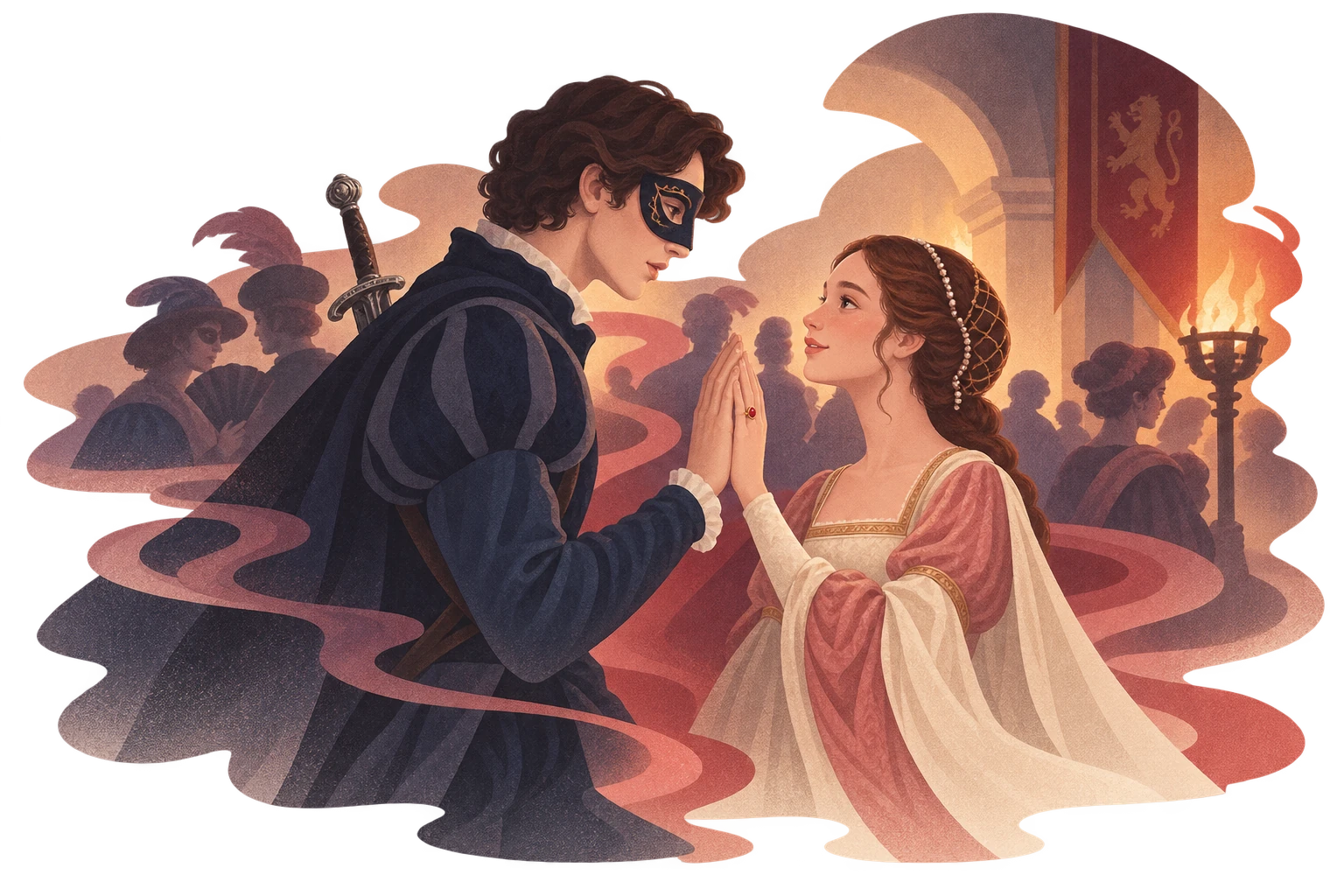
What Shakespeare changed from his sources
Shakespeare’s achievement lies less in inventing the lovers’ predicament than in reshaping it for the stage. Brooke’s poem already contains the central pattern of hostile families, secret love, marriage, a sleeping potion and a disastrous misunderstanding. Shakespeare makes that inherited material into an intensely immediate drama.
One important change is the compression of time. The play carries its lovers from meeting to marriage and death within a few days. This gives their decisions extraordinary urgency and makes delay, haste and mistimed messages crucial to the tragedy.
Shakespeare also develops supporting characters into powerful dramatic presences. Mercutio’s Queen Mab speech in Act 1, Scene 4 gives him a distinctive imaginative energy; his death in Act 3, Scene 1 turns the action decisively towards catastrophe. The Nurse’s affectionate memories and evasive chatter likewise make Juliet’s household feel vividly inhabited.
These changes help explain why the story feels so convincing. Its emotional reality comes from dramatic craft, not from proof that Shakespeare was recording actual lives.
Verona and the places associated with Juliet
Verona is a real Italian city, and Shakespeare explicitly places the action there. The Prologue introduces ‘fair Verona’ and an ‘ancient grudge’ between two households. Those details establish the play’s setting and conflict; they do not authenticate the lovers as historical people.
Verona also has visitor attractions associated with Juliet, including a house and balcony presented through the city’s connection with the story. Such places show the cultural afterlife of the play. They are not evidence that Shakespeare’s Juliet lived there or exchanged vows with Romeo from that balcony.
Even the familiar phrase ‘balcony scene’ needs a little care. In Act 2, Scene 2, Juliet appears above Romeo, and their conversation centres on love, names and the danger of discovery. The scene does not identify a surviving tourist landmark.
For study purposes, separate three things: the real city, the fictional setting and the later traditions attached to the story. They overlap in popular imagination, but they are not interchangeable kinds of evidence.
Why the tragedy feels true to life
A story does not need to be factual to reveal recognisable truths. Romeo and Juliet explores pressures that remain understandable: family loyalty, restrictions on marriage, aggressive ideas of honour and the difficulty of communicating under threat.
The lovers’ deaths also arise from a clear sequence of decisions and accidents. Romeo kills Tybalt after Mercutio’s death in Act 3, Scene 1. Capulet pressures Juliet to marry Paris in Act 3, Scene 5. Friar John’s explanation in Act 5, Scene 2 reveals that quarantine has prevented the crucial letter from reaching Romeo. These are causes within the fiction, not historical records.
The Prologue’s description of ‘star-cross’d lovers’ introduces fate, but the action also shows how people help create the disaster. That tension makes the ending feel both destined and preventable.
In an essay, distinguish historical truth from emotional and social truth. Rather than claiming that Shakespeare tells a true story, explain how he makes an inherited fictional tragedy expose the destructive effects of hatred, coercion and haste.
Questions
Did Romeo and Juliet really exist?
There is no reliable evidence identifying a real couple whose lives match Shakespeare’s Romeo and Juliet. The characters belong to a literary tradition that predates the play. Their names and setting are not enough to establish them as historical individuals.
Who wrote the story before Shakespeare?
Shakespeare’s principal source was Arthur Brooke’s 1562 poem The Tragical History of Romeus and Juliet. Earlier Italian versions were written by Luigi da Porto and Matteo Bandello. Shakespeare adapted an existing narrative rather than originating its central plot.
Is Juliet’s balcony in Verona real?
There is a physical balcony at the Verona attraction associated with Juliet, but it is not evidence of a historical Juliet or a real meeting with Romeo. The site belongs to the story’s later cultural and tourist history, not to a verified biography of the lovers.
Did Romeo and Juliet actually die?
Both die within Shakespeare’s play, but their deaths are not established historical events. In Act 5, Scene 3, Romeo takes poison because he believes Juliet is dead. She awakens, finds him dead and kills herself with his dagger.