How Many Acts Are in Macbeth?
Macbeth has five acts, usually divided into 28 scenes. Act 1 has seven scenes, Act 2 has four, Act 3 has six, Act 4 has three, and Act 5 has eight. Some editions divide the final action differently, so their scene totals may vary.
How many acts are in Macbeth?
Macbeth has five acts. Each act contains several scenes: smaller divisions that mark changes in the action, often involving a different location or group of characters.
The usual breakdown is:
- Act 1: 7 scenes
- Act 2: 4 scenes
- Act 3: 6 scenes
- Act 4: 3 scenes
- Act 5: 8 scenes
Together, these make 28 scenes. Act 5 has the most scenes, while Act 4 has the fewest. However, scene count does not tell you how long an act takes to read or perform: some scenes are brief exchanges, while others contain extended conversations.
You may find an edition with a ninth scene in Act 5 because editors sometimes divide the closing action differently. This does not mean there is an extra act or a different plot. For schoolwork, follow the scene numbering in your own edition.
What happens in each of the five acts
The acts trace Macbeth’s movement from honoured soldier to defeated tyrant:
- Act 1 — Temptation and decision: The witches predict that Macbeth will become king. After Duncan names Malcolm as his heir, Macbeth considers murder. Lady Macbeth persuades him to carry out their plan.
- Act 2 — Murder and its aftermath: Macbeth kills Duncan and immediately struggles with fear and guilt. Duncan’s sons flee after the body is discovered, and Macbeth is chosen as king.
- Act 3 — Insecurity and further violence: Macbeth arranges Banquo’s murder, but Fleance escapes. Banquo’s ghost disrupts the royal banquet, exposing Macbeth’s distress before his guests.
- Act 4 — False confidence and resistance: The witches’ apparitions encourage Macbeth’s misplaced confidence. He orders violence against Macduff’s household, while Malcolm and Macduff prepare to oppose him.
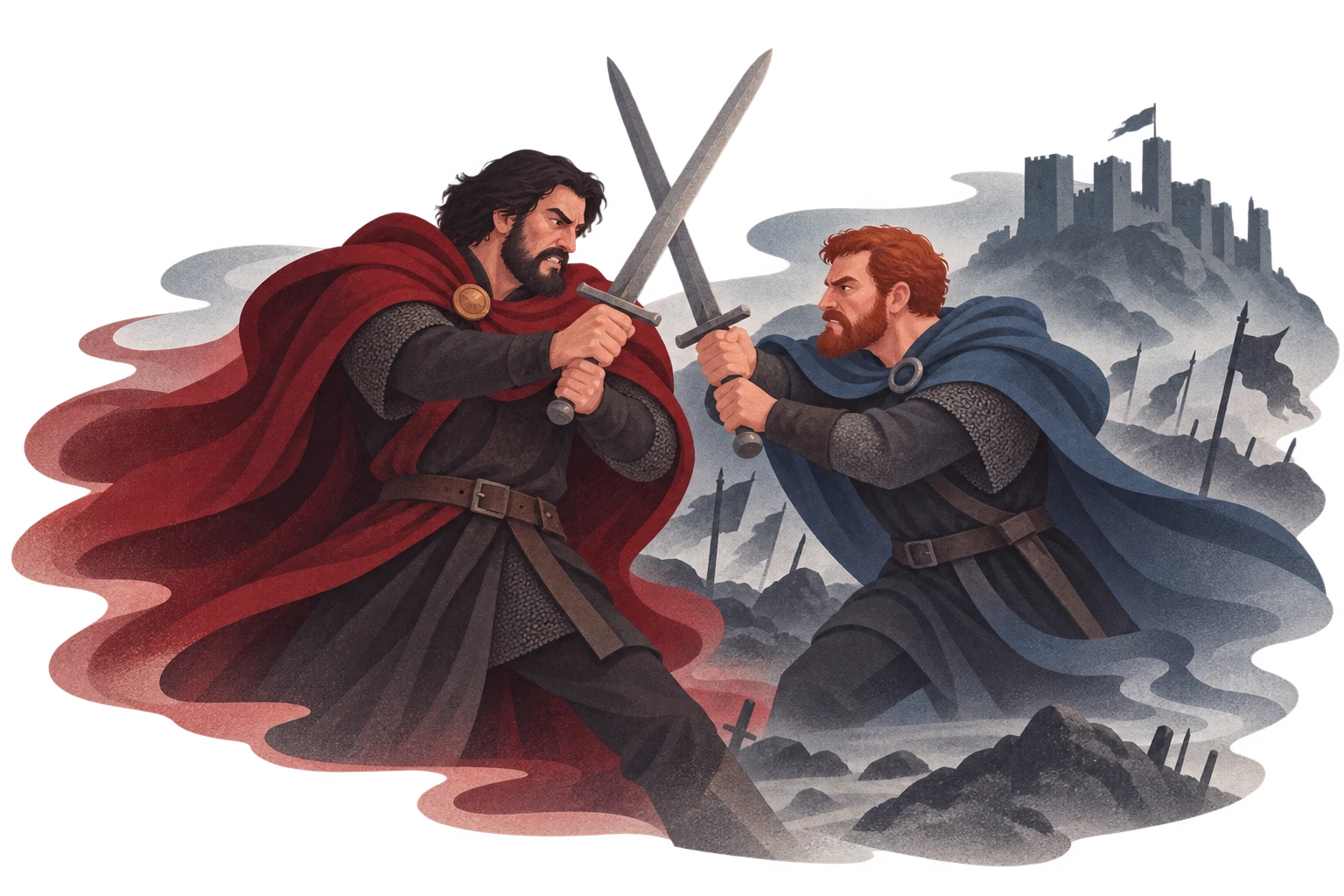
- Act 5 — Collapse and defeat: Lady Macbeth sleepwalks and later dies. Malcolm’s army advances, the prophecies prove deceptive, and Macduff kills Macbeth. Malcolm takes power.
This sequence helps you place individual scenes within the wider tragedy rather than treating them as isolated events.
Using acts and scenes in an essay
An act and scene reference tells your reader where to find a moment or quotation. For example, 1.7 means Act 1, Scene 7, not page 17. Page numbers vary between editions, so act and scene references are more useful when discussing Shakespeare.
The act divisions also help you explain how characters develop. In Act 1, Scene 7, Macbeth recognises his motive as ‘Vaulting ambition’. At this stage, he can still weigh the reasons against murdering Duncan. By Act 4, Scene 1, he responds to threats by ordering further violence, including the attack on Macduff’s household.
Lady Macbeth’s development provides another contrast. She helps organise the murder in Act 2, Scene 2, but her command ‘Out, damned spot!’ in Act 5, Scene 1 reveals guilt she cannot control.
In an essay, use these references to support a point about change across the play. Naming an act is useful; explaining how its events connect with earlier or later moments is stronger analysis.
Questions
How many scenes are in Macbeth altogether?
Macbeth usually has 28 scenes across five acts. The scene counts are seven, four, six, three and eight respectively. Some editions split the closing action into additional scenes, so check your copy before giving a scene reference.
In which act does Macbeth kill Duncan?
Macbeth kills Duncan in Act 2, Scene 2. The murder happens offstage: the audience sees Macbeth return afterwards, carrying the bloody daggers. Act 1, Scene 7 contains his hesitation and Lady Macbeth’s persuasion, not the murder itself.
In which act does Macbeth die?
Macbeth dies in Act 5, killed by Macduff during the final battle. Their duel is usually numbered Act 5, Scene 8. Macduff reveals that his birth was not the ordinary kind Macbeth assumed the witches’ prediction meant, destroying Macbeth’s sense of protection.