Who Does Macbeth Kill? His Victims Explained
Macbeth kills Macdonwald, King Duncan, Duncan’s two guards and Young Siward himself. He also orders the murders of Banquo and Macduff’s wife, children and household. Banquo’s son Fleance is targeted but escapes. The crucial distinction is between people Macbeth kills personally and people killed by others on his orders.
Who does Macbeth kill himself?
The play identifies several people Macbeth kills personally, although not all these deaths happen onstage. In the order of the play’s events, they are:
- Macdonwald: Macbeth kills the rebel in battle before the play’s main action. The Captain reports the killing in Act 1, Scene 2. This initially establishes Macbeth as a courageous defender of Duncan’s kingdom.
- King Duncan: Macbeth murders the sleeping king offstage in Act 2, Scene 2. He wants the crown, despite recognising Duncan’s goodness and his own duties as Duncan’s subject, kinsman and host.
- Duncan’s two guards: Macbeth kills the attendants whom he and Lady Macbeth have framed for Duncan’s murder. In Act 2, Scene 3, he claims that anger at their apparent crime overwhelmed him. Their deaths also prevent them from defending themselves or giving evidence.
- Young Siward: Macbeth kills Siward’s son in combat in Act 5, Scene 7, during the attack on Dunsinane.
These killings are not morally interchangeable. Shakespeare first presents Macbeth’s battlefield violence as loyal service, then shows him turning his capacity for violence against the king he should protect.
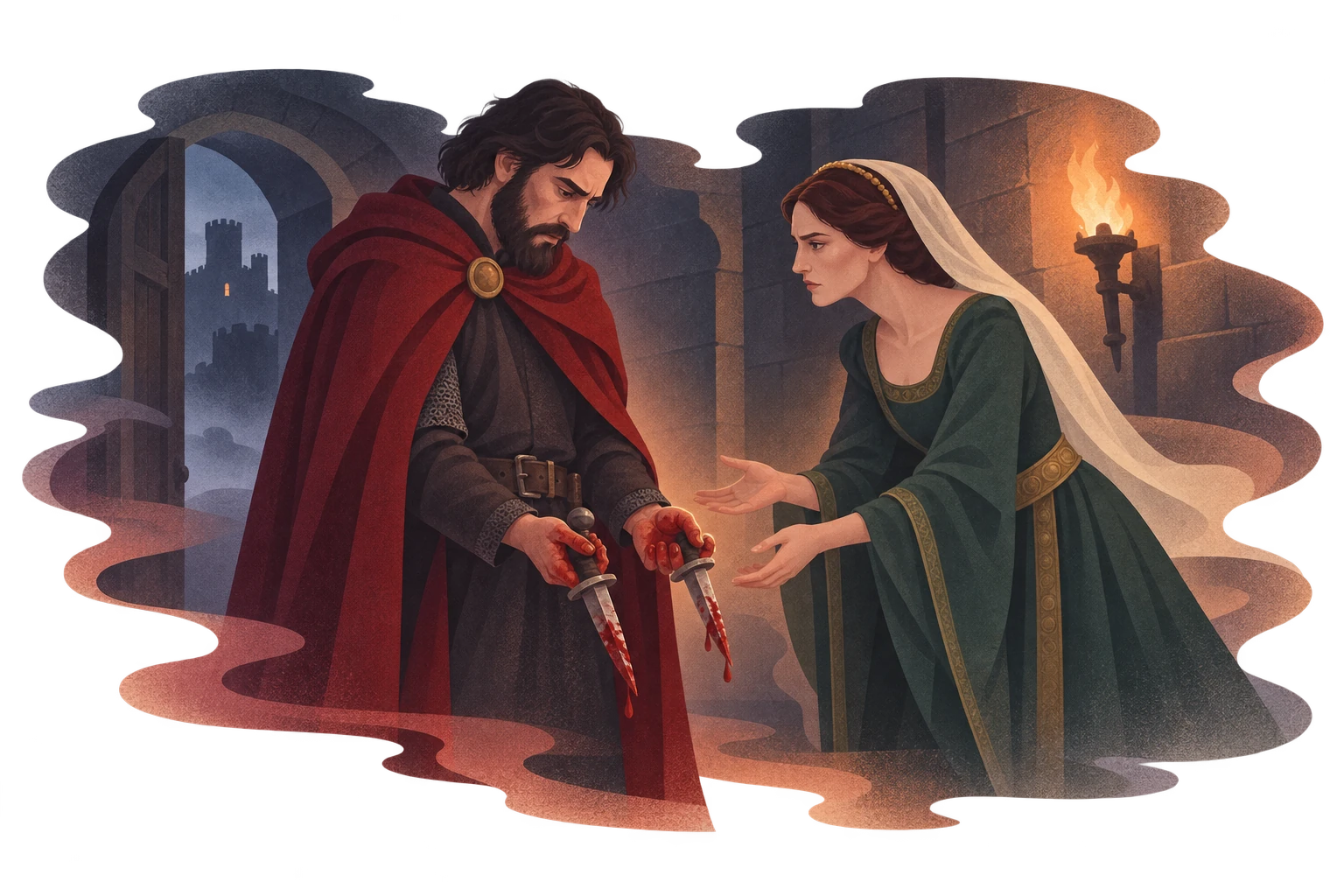
The murders Macbeth orders
Macbeth does not personally kill Banquo or Macduff’s family. He is nevertheless responsible for arranging their deaths.
Banquo becomes a threat because the witches predict that his descendants will be kings. In Act 3, Scene 1, Macbeth recruits murderers to attack Banquo and his son, Fleance. Banquo is killed in Act 3, Scene 3, but Fleance escapes. Macbeth therefore destroys his friend without removing the possibility of Banquo’s descendants inheriting the throne.
Lady Macduff, Macduff’s children and members of their household are targeted after Macbeth learns that Macduff has fled to England. In Act 4, Scene 1, he resolves to attack Macduff’s castle. Murderers stab Macduff’s son onstage in Act 4, Scene 2; Lady Macduff flees, pursued by them. Ross confirms the deaths of Macduff’s wife and children in Act 4, Scene 3, along with the slaughter of others found there.
This distinction matters when writing about responsibility: say that Macbeth orders these murders, rather than claiming that he carries them out himself. His physical absence does not lessen his responsibility for the violence.
How the killings reveal Macbeth’s downfall
Macbeth’s motives change as the play develops. He kills Duncan to gain power, then orders further killings to protect what he has gained. His admission of ‘vaulting ambition’ in Act 1, Scene 7 identifies the desire driving his first royal murder.
Once crowned, he discovers that possession of the throne does not bring security. ‘To be thus is nothing’ (Act 3, Scene 1) introduces his fear that being king means little unless he can remain king safely. Banquo’s murder is therefore an attempt to control the future, not a necessary response to an immediate attack.
The slaughter of Macduff’s family takes this violence further. Macbeth attacks vulnerable people who have not challenged him in battle. His rule has become tyranny, sustained through fear rather than loyalty.
For an essay, connect each victim to Macbeth’s changing motives: loyal service, ambition, concealment, insecurity and revenge. This creates an argument about his deterioration rather than simply a list of deaths. Finally, Macduff kills Macbeth in Act 5, Scene 8: the violence Macbeth uses to secure power ultimately brings about his destruction.
Questions
Does Macbeth kill Banquo himself?
No. Macbeth hires murderers to kill Banquo and Fleance in Act 3, Scene 1. Three murderers carry out the ambush in Act 3, Scene 3. Banquo dies, but Fleance escapes. Macbeth is responsible for planning the attack, not for personally striking Banquo.
Does Macbeth kill Lady Macbeth?
No. Lady Macbeth’s death is reported in Act 5, Scene 5, but it is not shown onstage. In Act 5, Scene 8, Malcolm reports that she is thought to have taken her own life. The play does not show Macbeth killing her.
Does Macbeth kill Macduff?
No: Macduff kills Macbeth in their final confrontation in Act 5, Scene 8. Macbeth has ordered the murder of Macduff’s family, which gives Macduff a personal reason for revenge alongside his determination to free Scotland from Macbeth’s rule.
Does Macbeth kill the original Thane of Cawdor?
The play does not identify Macbeth as Cawdor’s executioner. Duncan orders the former thane’s death for treason in Act 1, Scene 2, and Malcolm reports his execution in Act 1, Scene 4. Macbeth receives Cawdor’s title, but that does not mean he kills him.
Why does Macbeth kill Duncan’s guards?
Macbeth claims that his love for Duncan and fury at the apparent murderers made him kill the guards in Act 2, Scene 3. However, killing them also silences potential witnesses and prevents them from challenging the evidence planted against them.